MOVE - It's one of my strongest peremptory needs, if I sit still for too long I get anxious, and confined spaces drive me nuts. This need became evident when I read "Anatomy of Restlessness" by Bruce Chatwin, back in 2000. I understood then that travelling is like an inner call that natural born nomads have to follow in order to keep being themselves. Johnny Walker, keep walking! Even at work I need space, big windows, light, to see the sky and when possible trees to feel comfortable. I started taking lunch walks back in 2006 in Canada, half an hour is for eating, the other half is for moving, walking dramatically improves my well being.

On the other hand I also need a change of landscape, air, language, from time to time, it's like breaking up habits keeps my brain alive, and gives me a sense of freedom. At the same time big metropolitan centers also make me feel uncomfortable, caught between stone or concrete surfaces. I am less and less attracted by the idea of travelling to a city, may that be as fascinating as Berlin or Paris. Besides, they started being so similar, packed with hordes of tourists, crossed by metro lines, filled with Irish pubs, French bakeries and Italian fake restaurants next to horrible fast food or so called gourmet coffee chains. All big cities have a cathedral, national museums and world famous landmarks. I long for wide horizons, green meadows, thick forests and majestic snow capped mountains, surrounding small historical towns or picturesque villages. All with a bit of quiet and solitude, although it's already been said you can't feel lonelier than in the middle of crowds.
So having to take a week off by the beginning of spring I left aside the hypothesis of Amsterdam, Brussels, Lyon or Florence and decided to go to the closest cheapest flight destination: Madrid. Not only it's a big city, but I'm not even fond of it like I am of New York, Paris, Rome or more recently London. I am fond of its liveliness and mix of cultures though and only during this fifth or sixth visit I started to internalize its structure and subtleties, finding my favourite corners. Some of its best features are being reasonably close to Lisboa and playing host to great temporary exhibitions plus a good cultural alternative scene. Last but not least, quite a few friends call it a home and it's nice to see them after wandering all day by myself. Although being by myself didn't mean that I didn't talk to unknown people in the hostel or on the street. It's nice to enjoy all that time and temptations without having to please anyone else and be able to talk to someone around if you feel like, madrileños are quite social and easy going.

I wonder if during any of my former trips I was ever so conscious about how madly I can run all day covering kilometers, with very few and short stops, even to eat or sit down a bit. Why on Earth do I have so much physical energy to spend? Each evening would find me exhausted with my head busting with impressions and memories of the day. I didn't even count the number of exhibitions I visited and I was even scared of my hunger to see and learn more. On every trip I keep learning also about myself and my way of being in the world. At the same time I knew beyond the shadow of a doubt that it was also a form of escapism, of running away from my life. So putting this now on paper helps me saving something, giving it a sense.
Since the first day a friend took me to La Tabacalera former cigarette factory, now a cultural centre, and inspired me to take more abstract photos. I started looking around in a different way for the whole week. The way that objects are placed in an exhibition and how people deal with it. Putting out of the context certain parts and play with them. Then there were the social photographs at Caixa Forum, quite an amazing contemporary building . Photographs taken around the less charming nowadays Spain, portraits of guerrilleras from San Salvador or Afghan refugees in Greece next to heartbreaking images of refugees all over the world, especially from Africa and Middle East (Syria and Iraq) with their most prized possession since they left home with very little, could be a buzuk (music instrument), bracelets, a cane, a donkey, whatever gave them comfort on the way.
Later I got enchanted by the amazingly bright rainbow like paintings of Raoul Dufy who wanted to render light through colour, followed by the disquiet harmony and subtle anxiety of Paul Delvaux, both provoking the eyes and the mind in diferent ways.
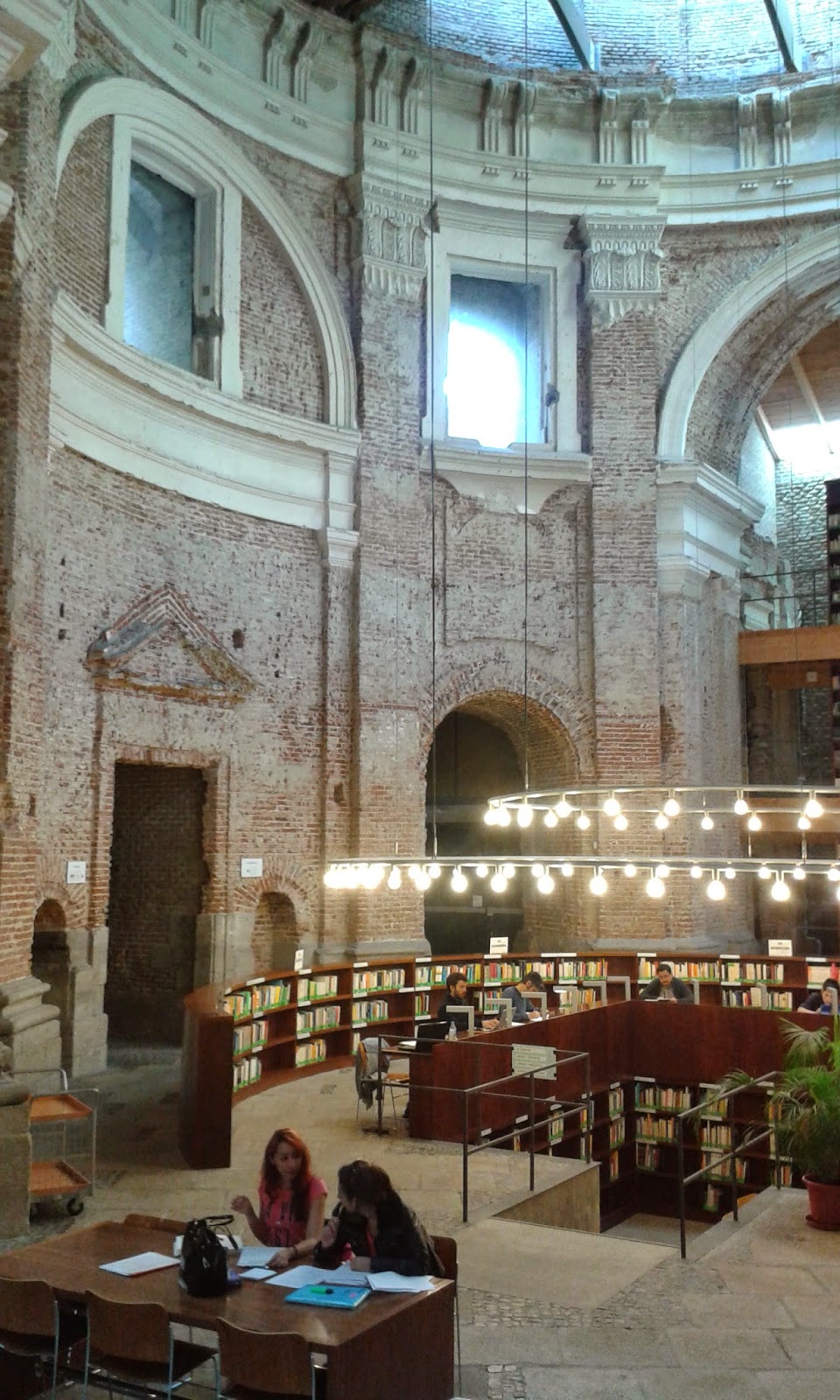
In between exhibitions I managed to fall in love with the Malasaña and Lavapiés colourful and kind of irreverent neighbourhoods, with the alternative shops and eateries of the first and the multicultural flavour of the second, especially the Mercado de San Fernando and the UNED library that used to be a church.

And when my mind was really crying for some green and some peace I walked along the Manzanares river green path and went to discover also Casa de Campo and Campo del Moro parks.
I couldn't resist paying another visit to Bosch, Goya, Ribera, my Museo del Prado favourites and I also discovered the history of Madrid in the city museum, quite interesting as it explored both its architecture and the social fabric of its inhabitants, customs and habits. Walking into yet another free cultural centre: Casa Encendida, I got acquainted to Colombian Suarez Londoño and his masterful sketch books drawings.
Just before taking the plane, and while looking desperately for a mailbox for my postcards, I managed to find time for the insightful Giacometti exhibition dedicated to the look: El hombre que mira, completed by very inspiring quotes on eye perception of the human body. I was very touched by an apparently simple drawing: an eye looking at a tree, that for me became suddenly the symbol of the wonder of spring.
And to top all this, I went twice to the theatre, as I managed to get a ticket, unbelievably, for Robert Lepage's "Needles and Opium", he's one of my favourite directors hailing from my former home Québec. Then it was an alternative play loosely based on "Fuenteovejuna" by Lope de Vega, that was actually quite weak, although the actors were making quite an effort.
When did I see my friends then? Well, some for lunch and a walk, some for dinner, for a tea, night drinks or an exhibition, or even host me for a couple of nights. It felt great and refreshing to see them and I guess I'll return to Madrid sooner than two years this time.
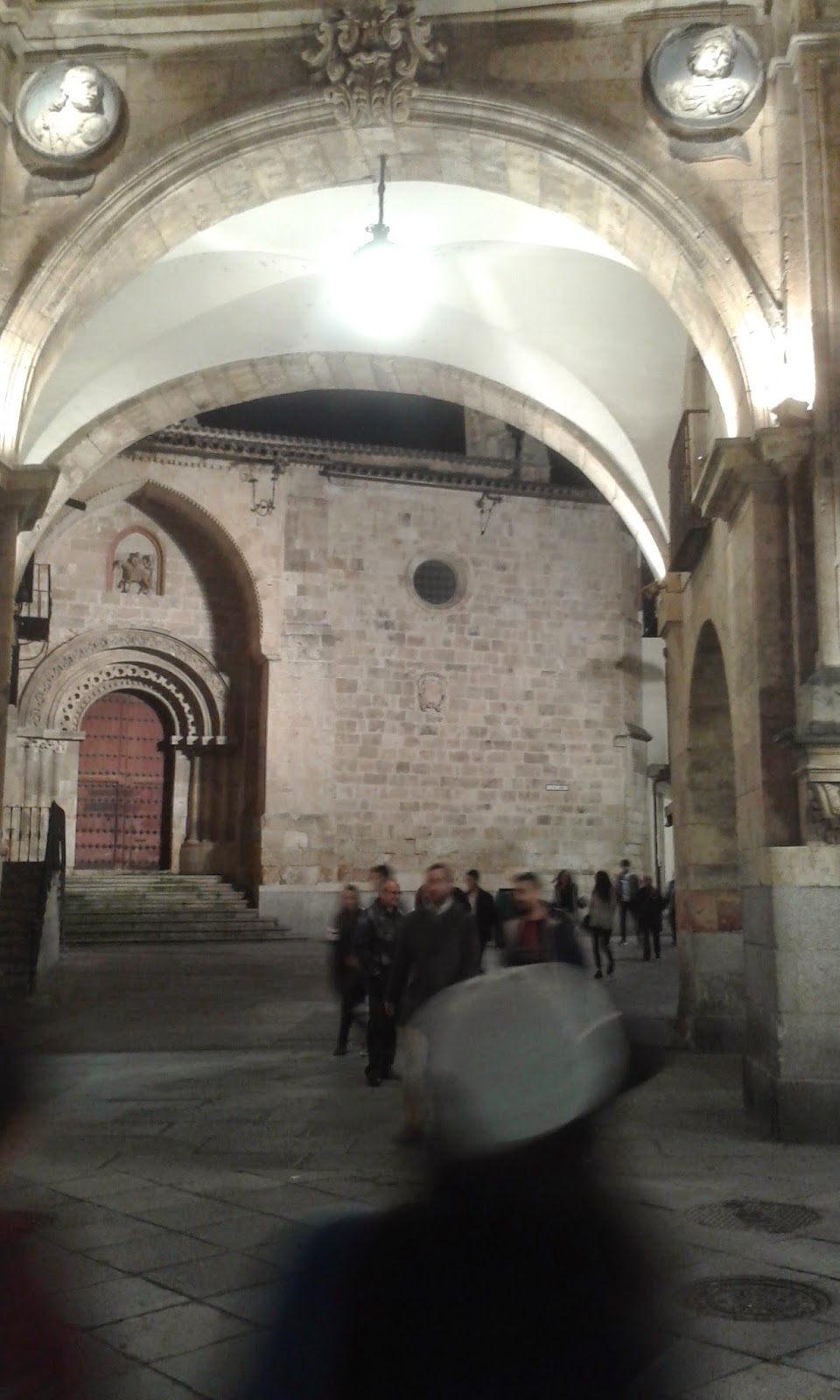
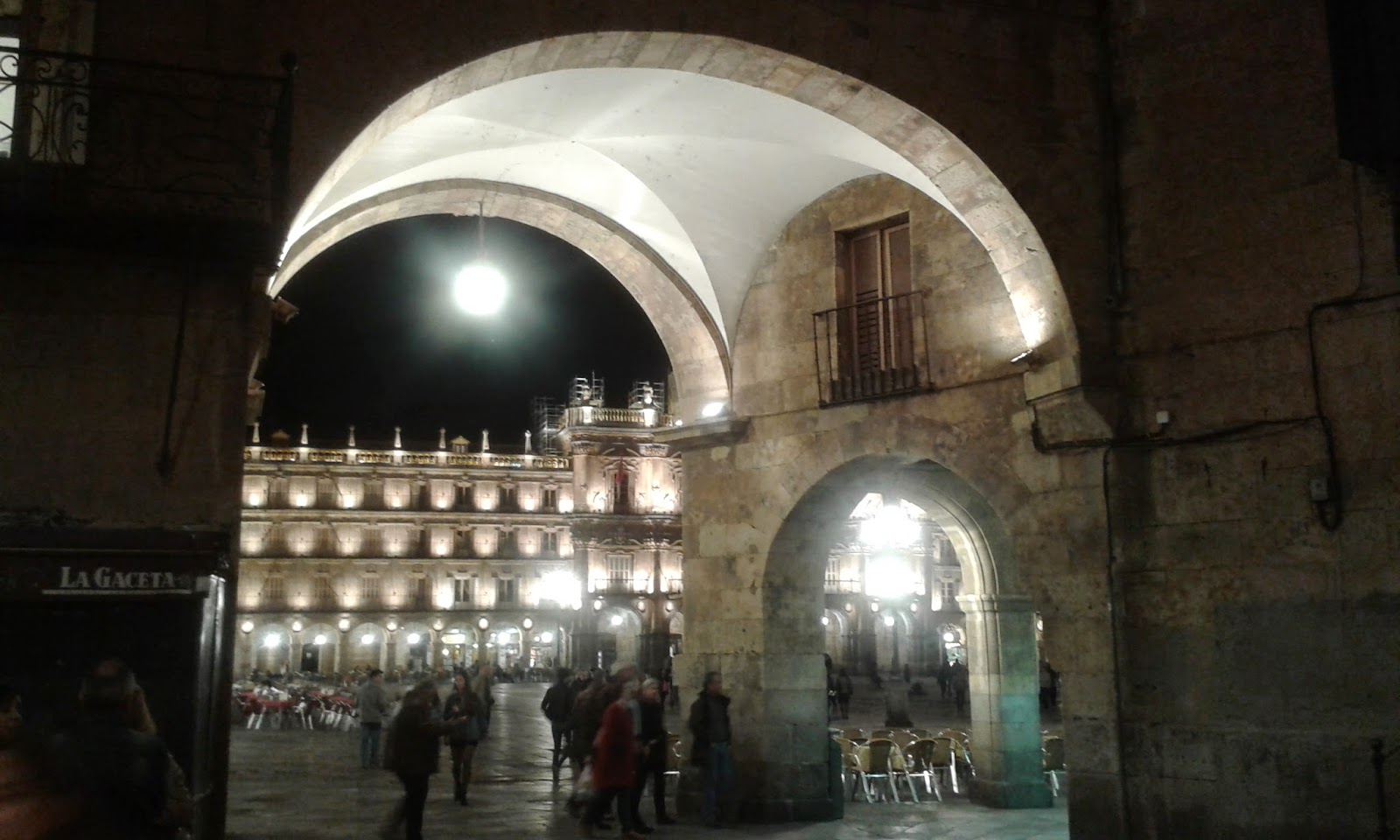
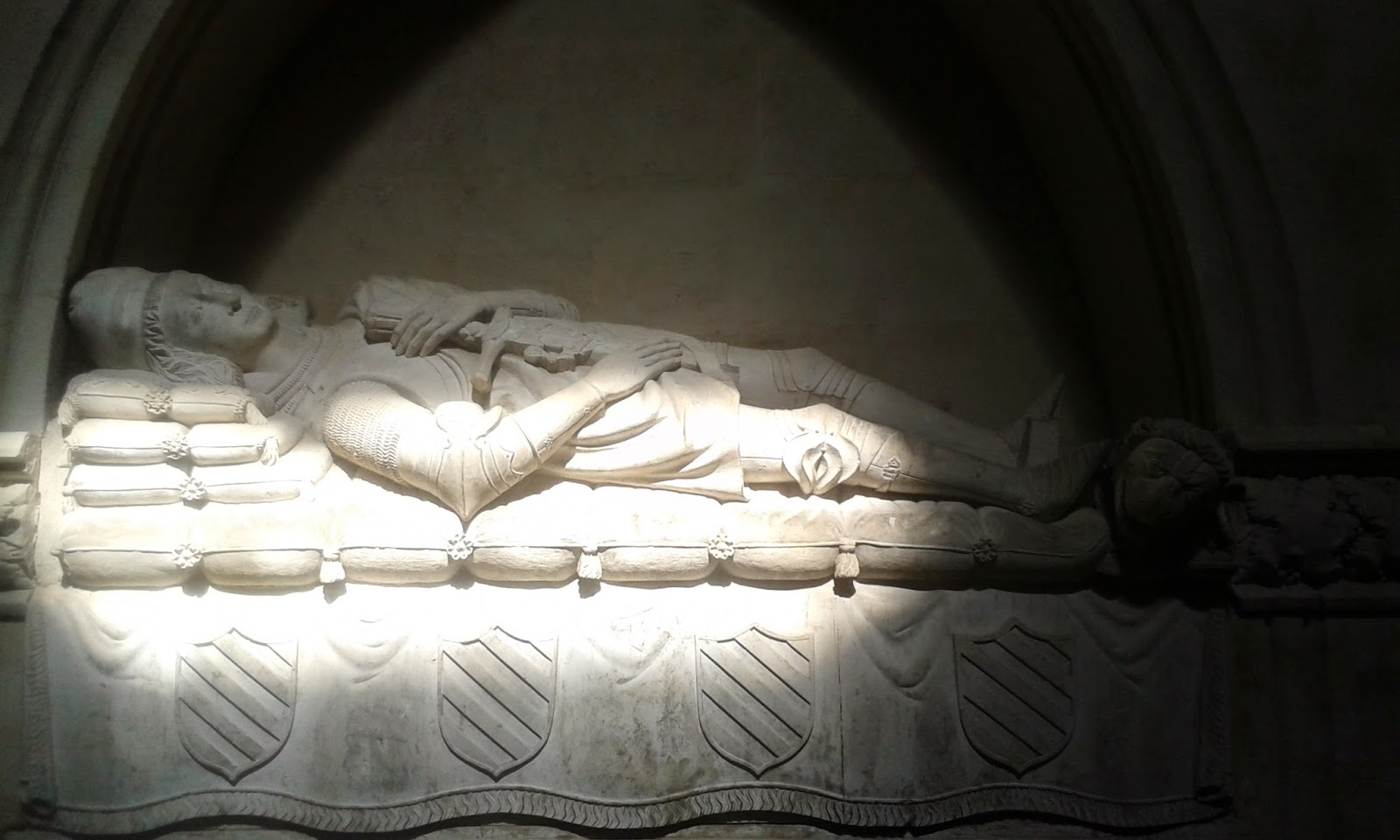
 If Segovia is dominated by the cathedral and the Alcazar telling a lot about the power of the church and the nobility throughout history, Salamanca is even more religiously overwhelming. There are not one, but three great churches/convents, the cathedral counting actually for two, Romanesque and Gothic built side by side. Playing host to the third oldest university in the world (after Bologna and Oxford), it's all about schools and churches, but also a magnificent Plaza Mayor, a surprising Art Nouveau museum, nice cafés and great food.